
Chongqing's metro network is fast, clean, and cheap. It does the hard work of climbing steep hills and crossing deep river valleys, leaving you fresh to explore each neighbourhood.
Use the metro for the longer journey
Chongqing Rail Transit (CRT) includes underground subway trains and elevated monorails. Most visitors call the whole system the metro. Stations are clearly marked in English and Chinese, with numbered lines and color codes. You do not need to memorize every stop across Chongqing (重庆).
Explore one neighbourhood at a time. For example, spend your morning watching trains glide through the residential block at Liziba (李子坝) and walking the nearby cliffside paths. Later, take the train directly to Jiefangbei (解放碑) for street food, shopping, and night views. The metro handles the long distances and steep climbs between districts, saving your feet for sightseeing.
Save the official Chongqing metro map (10 February 2026) on your phone before heading out. Platform signs show the terminal station for each direction, so check the end stop before boarding. When you change trains at transfer stations, follow the overhead transfer arrows to your new platform before tapping out through any fare gates.
Know the main tourist lines
Line 1 (1号线) connects top historical and cultural sights. Take it west to (磁器口) station for Ciqikou Ancient Town (磁器口古镇). Heading east into the Yuzhong peninsula, Line 1 stops at Lianglukou (两路口; Lianglukou) and Xiaoshizi (小什字; Xiaoshizi), placing you right by central shopping streets and river viewpoints.
Line 2 (2号线) is a scenic monorail running along green river cliffs. It links Jiaochangkou (较场口; Jiaochangkou) and Linjiangmen (临江门; Linjiangmen) near central Jiefangbei directly to Liziba. Ride the elevated train through the building at Liziba for the onboard view. Then follow the marked signs down to the street viewing platform for classic photos from below. Note that Liziba has station work during 2026, so follow on-site arrows for open pathways.
Line 6 (6号线) crosses the Jialing River on Qiansimen Bridge and the Yangtze River on Dongshuimen Bridge. It takes you from Xiaoshizi across to (上新街) on the South Bank. This gives you easy access to Longmenhao (龙门浩; Longmenhao) historic riverfront streets and the southern station of the Yangtze River Cableway (长江索道). Line 6 also passes Hongtudi (红土地; Hongtudi), famous as one of China's deepest metro stations with long escalators.
Line 10 (10号线) connects directly to Terminal 3 and Terminal 2 at Jiangbei International Airport. Terminal 2 is also served by Line 3 (3号线). Check our guide on getting from Jiangbei Airport to your hotel to match your arrival terminal with the smoothest train ride.
Buy tickets with a simple first ride
Single-journey tickets are the simplest option for your first trip. Touchscreen ticket machines in every station have an English language button. Tap your destination station on the line map, and the screen calculates the exact distance fare, usually between 2 and 7 RMB. Pay with cash or a mobile payment app.
If you prefer to scan your phone at the turnstiles, make sure to use a transit QR code (乘车码; chengchema) inside Alipay or WeChat. A regular shop payment code (付款码; fukuanma) will not open the metro gates. You must activate the Chongqing Metro mini-program inside your app before scanning. When using a ride code, scan the exact same app and account at both entry and exit so your fare clears properly.
With a physical token or card, tap the reader on top of the gate to enter. At your exit station, drop the plastic token into the slot on the gate. Keep your physical ticket safe throughout your trip.
Find the right exit, then the right level
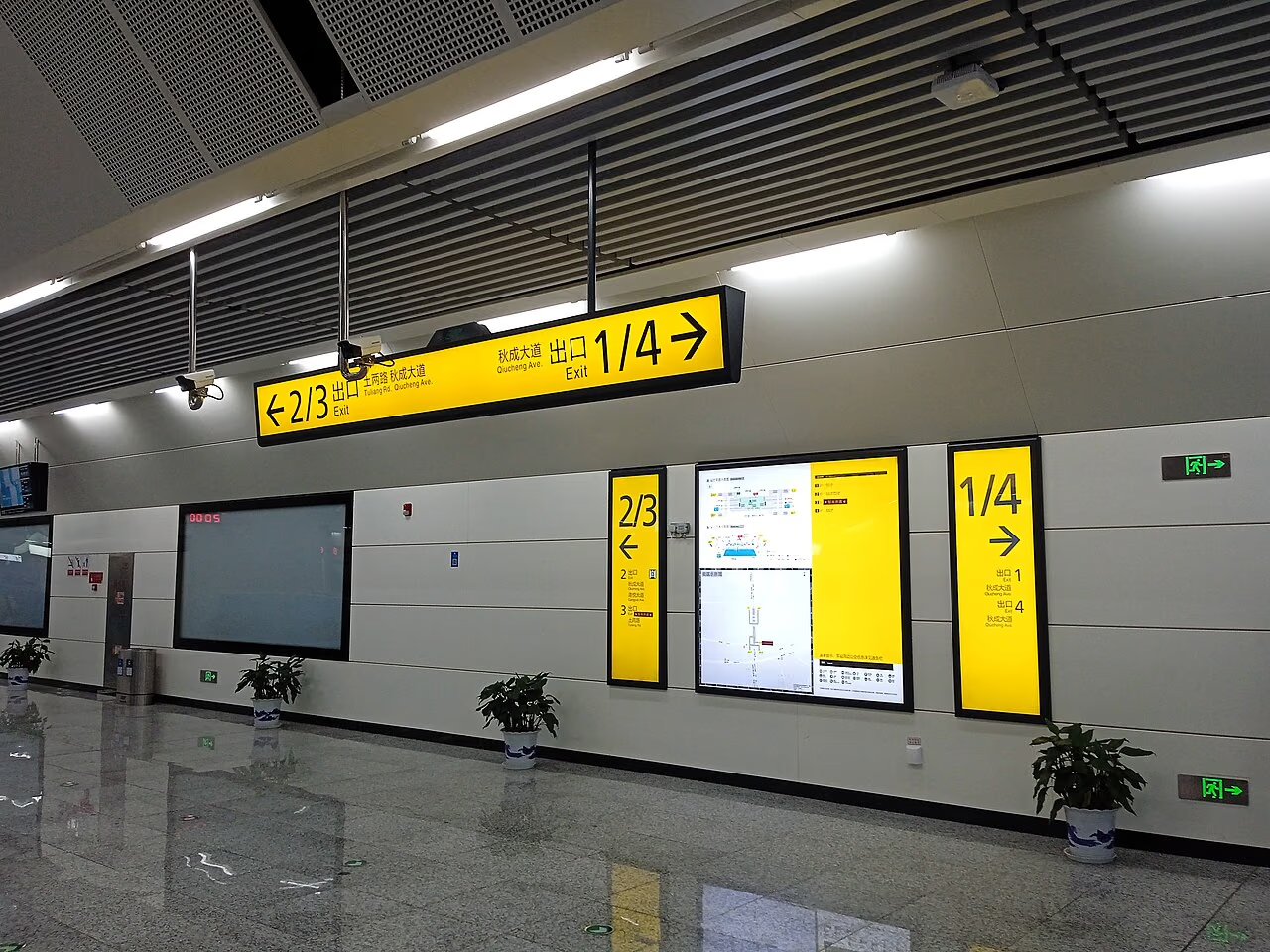
Chongqing's multi-level geography means different station exits lead to completely different heights. Exit A might put you on a high road overpass, while Exit B puts you on a riverside street far below. Always check the station wall maps and exit directories before heading up the escalator.
Locate your destination on our city map, then check walking directions from the station exit. A flat line on a map does not reveal hidden staircases or cliff paths. If you have heavy suitcases or a stroller, look for elevator icons on the station signage before choosing an exit.
Hongya Cave (洪崖洞) is a classic example. The top floor opens onto the city streets of Jiefangbei (11th floor), while the bottom floor opens onto the riverside road (1st floor). Deciding whether you want skyline dinner views or riverfront photos in advance saves you an exhausting climb up or down hundreds of stairs.
Add taxis and walking where they fit
Yellow metered taxis are plentiful and cheap. To flag one down, show the driver your destination written in Chinese characters (such as 解放碑 or 洪崖洞), or display the Chinese address on your phone map.
For fixed-price bookings and easy pickup tracking, use an app such as Didi, including supported services within Alipay. The app sets the exact pickup pin and displays the fare upfront. Our ride-hailing app guide covers account setup, English navigation settings, and how to spot your car.
Walking is wonderful once you are inside a single compact district. Wander the stone stairways, riverwalks, and quiet tea gardens at your own pace. But whenever you need to travel between different hills or cross river bridges, take the metro or grab a quick taxi.
Keep city rail and mainline trains separate
Trips to Chengdu on the Chengdu and Chongqing high-speed line or day trips to Wulong (武隆) depart from mainline high-speed railway stations, not the city metro. Railway tickets are tied to your passport number and specify an exact station name.
Chongqing has three major passenger railway hubs: Chongqing North Railway Station (重庆北站), Chongqing West Railway Station (重庆西站), and Chongqing East Railway Station (重庆东站). Chongqing East also serves high-speed trips toward Wulong. These hubs sit in different corners of the city. Always check the Chinese station name on your booking confirmation and give yourself at least 45 minutes for station security and passport checks.

Common questions
Can I pay for the Chongqing metro with cash?
Yes. Every station has touchscreen ticket machines that accept cash banknotes and coins, as well as staffed service counters (客服中心) where you can buy single-journey tickets.
Why does a short walk take longer in Chongqing?
Chongqing is built on steep cliffs and river valleys. Roads and buildings sit on different height levels. Choosing the correct metro exit and building entrance saves you from climbing hidden outdoor staircases.
Sources & updates
- Chongqing Rail Transit: official network informationLast updated Oct 4, 2026
- Chongqing Transport Bureau: official rail network map (10 February 2026)Last updated Oct 18, 2026
- State Council: guide to working and living in China, transport and paymentsLast updated Oct 4, 2026
- Chongqing Rail Transit via city government: 2026 Liziba station workLast updated Oct 4, 2026
- Chongqing Government: Chongqing East to Wulong South high-speed railwayLast updated Oct 4, 2026
- Chongqing Metro Line 6 Bridge Operation Monitoring ProjectLast updated Oct 5, 2026
Did this guide help you?
Why? (optional)


