
Gongtan Ancient Town hugs the steep cliffs of the Wu River with timber stilt houses and stone lanes. Visiting for two days gives you time to explore merchant courtyards, take a river cruise and enjoy local food without rushing back to the city.
Map · SightsChoose Gongtan for an overnight escape


Gongtan Ancient Town (龚滩古镇) sits beside the Wu River in Youyang, southeast of central Chongqing. Choose it for wooden houses above the river, stone lanes, courtyard visits and time spent drawing or taking photographs. The town works especially well as a two-day extension after your city stay.
A day trip is possible with an early train and timed road transfers. Stay overnight if you want to walk the riverfront after dinner and see the buildings again in morning light. For a river-view stay, consider Jiangyun Shancheng Homestay (龚滩古镇江韵山宸民宿), at 川盐路148号. Choose a river-view balcony room for time overlooking the water. Parking near the north gate gives it a useful road arrival point.
If you want an old-town visit within your city schedule, choose Ciqikou for stone lanes and snacks. For a full day among huge limestone arches, choose Wulong. Art lovers who prefer stone sculpture can spend that day at the Dazu Rock Carvings.
Reach Gongtan by train or road
The useful railway route is Chongqing East (重庆东) to Pengshui West (彭水西). Train journeys take about 45 to 70 minutes. From Pengshui West, continue by road toward Gongtan, about 40 minutes. The scenic shuttle route serves Pengshui West, Jiuli City and Gongtan.
Search both Chinese station names when buying your train ticket. These two journey times cover the train and road ride. Add your hotel transfer to Chongqing East, station boarding time and the wait for the connecting vehicle.
At Pengshui West, ask for the Gongtan scenic shuttle (龚滩景区直通车). Check that day's return departures at the shuttle ticket point or Gongtan visitor service center before choosing your return train. This gives the second day a clear end time while leaving the morning for the river or galleries.
For driving, take the S3 Yuxiang Expressway to the Gongtan exit (龚滩收费站). Set your destination to Gongtan Ancient Town Visitor Center (龚滩古镇游客中心), or your inn's road arrival point. The expressway provides a direct exit for Gongtan.
Read the old salt port through its buildings
Gongtan grew where river cargo changed to overland transport. Salt traveled from Sichuan along the Yangtze to Fuling, then upstream on the Wu River. At Gongtan, porters carried it onward toward Longtan. River landings, storage rooms, shops and homes formed one working town.
The current town was relocated and rebuilt after downstream hydropower development began its move in 2006. Workers numbered stone paving, wooden building parts, roof tiles and door plaques before reassembling them at the new site. Residents moved with them. Today's streets combine salvaged old materials, rebuilt structures and everyday town life.
Look for the Yongding Chenggui Stele (永定成规碑). Its rules record payment for carrying cargo, giving the old port a human scale. Continue the story at Xiqin Guildhall, built for salt merchants from Shaanxi, and a household courtyard such as Ran Family Courtyard (冉家院子).
See how the stilt houses fit the slope
Gongtan's stilt houses (吊脚楼) make best sense from two levels. On the stone street, look at the shop doors and rooms opening beside the path. Then descend toward the river and look back at the wooden posts supporting the lower sides.
The raised floors made room for homes and cargo storage on a narrow, steep slope. Roofs overlap because neighboring houses start at different heights. Carved window frames add small details that disappear in a wide river photograph.
Use three views for an architecture walk: a street-level shopfront, a river-facing row of support posts, and a close view of a carved window. Pause in a lane where the roofs stack above each other. This gives you a fuller record of the buildings than a single distant panorama.
Visit the guildhall, courtyards and art spaces

Xiqin Guildhall and Ran Family Courtyard
Xiqin Guildhall (西秦会馆) brings merchant history and theatre into the same courtyard. Enter beneath the raised theatre, then look back toward the stage. The buildings rise with the slope, forming several levels from which people could watch a performance. Look closely at the carved wood, stone details and painted decoration around the halls.
Choose Ran Family Courtyard (冉家院子) next for a smaller domestic setting. Comparing the two helps you see the difference between a merchant gathering place and a family home. Chuanzhu Temple (川主庙) honors Li Bing, the river engineer linked to Dujiangyan.
Wu Guanzhong Memorial and Gongtan Art Museum
Visit the Wu Guanzhong Memorial (吴冠中纪念馆) before a drawing or photography walk. Its displays explain the painter's connection with Gongtan. The first floor holds temporary exhibitions, while the second has a documentary display about the artist and town.
The Gongtan Art Museum (龚滩美术馆) adds work by contemporary artists and visiting students. After looking at the pictures, return to the streets and choose your own subject: dark roof edges, pale walls, wooden windows or a river-facing house. A sketchbook visit needs no formal class and gives the afternoon a clear focus.
Choose a craft session or evening performance
Gongtan's living traditions include Tujia weaving, local food making and stage performances. Xiqin Guildhall has heritage displays and learning activities. The town also has places where visitors learn to make green mung-bean noodles and green-bean pastries.
Choose a food-making session if you want to connect lunch with the process behind it. Tujia brocade, known as 西兰卡普, offers a different craft focus: woven patterns you can compare with the cloth and craft goods sold in town.
Check the daily programme at the guildhall or visitor center to select a session or performance. Evening choices include masked 阳戏 theatre and 摆手舞, a Tujia group dance beside the river. Keep the performance slot flexible within your first evening rather than building your train schedule around a fixed show time.
Take a local Wu River cruise
A boat gives you the river view that the upper stone streets cannot: rows of houses above the bank and the cliffs beyond town. The local Wu River Gallery cruise (乌江画廊精品游) costs CNY 158 (≈ USD 24 ≈ USD 24) per person. It explores the Wu and Apeng rivers from Gongtan.
Go to the quay for that day's sailing times, then fit your street walk around the departure. The local service starts with at least four passengers. Putting the cruise on the second morning leaves the first afternoon for buildings and art.
A longer river journey from Wanzu Quay (万足码头) in Pengshui to Gongtan is another choice. Use it when the canyon journey is a main purpose of your trip. Arrange the longer sailing as part of your regional route, as it is a separate service from the local Gongtan cruise.
Eat through the town over two days
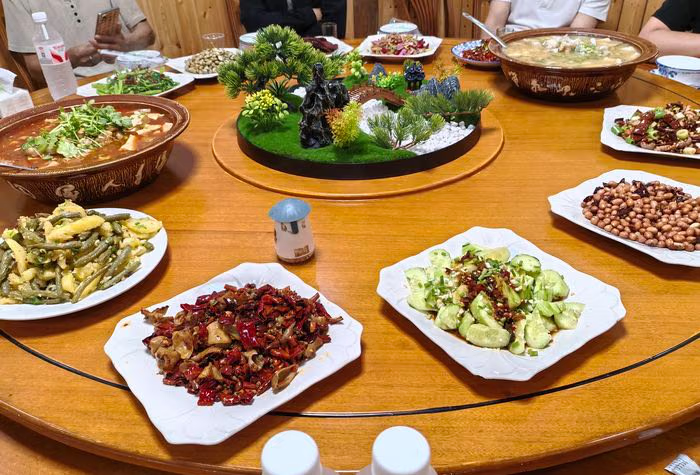
Breakfast and small street snacks
Start with 绿豆粉, soft strips made from a rice-and-mung-bean batter. The batter is cooked into sheets and cut, with green vegetables sometimes adding color. Choose a hot bowl with broth and toppings, or a stir-fried serving.
凉拌米豆腐 is cool rice jelly dressed with chili oil, garlic, vinegar and other seasonings. Its name mentions tofu, but the base is rice. Pair it with 卤豆干, firm braised soy tofu, for two different textures.
For something sweet, try 酥食, local crisp pastries, or 荞麦粑粑, pan-fried buckwheat cakes. These fit a pause between courtyard and gallery visits. Food-making sessions can also introduce 绿豆酥, green-bean pastries.
A shared lunch or dinner
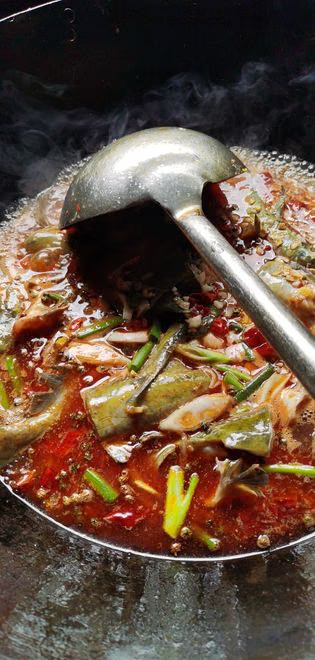
龚滩酿豆腐 consists of tofu pockets filled with minced meat, then simmered, often after frying. Choose 酸汤豆腐鱼 for fish and tofu in a sour broth. Together, they show two ways local cooks use tofu.
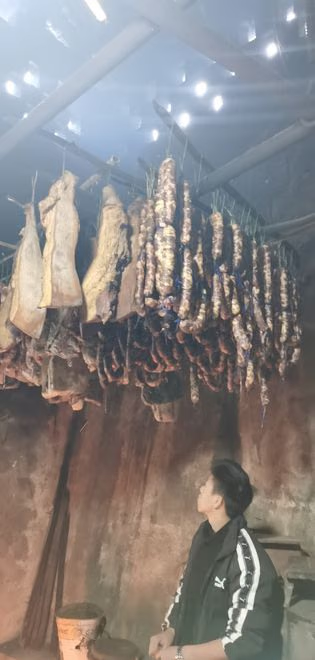
For a smoked-pork dish, order 干笋子炒腊肉, dried bamboo shoots stir-fried with cured pork. 龚滩烧白 offers another pork choice. Add 清炒杂菌, stir-fried mixed mushrooms, when sharing several dishes.
A restaurant for a shared meal
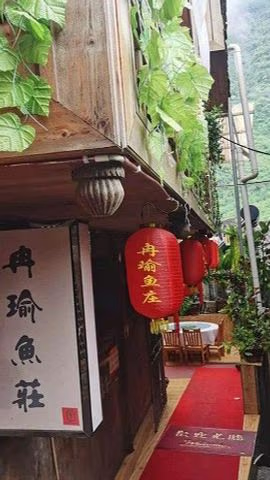
Gongtan Ranyu Fish Restaurant (龚滩冉瑜鱼庄) at 川盐路108号 is a solid choice for a fish-and-tofu meal. Expect to spend about CNY 81 (≈ USD 12 ≈ USD 12) per person. Its dishes include fish with tofu, rice jelly, smoked pork and local mushrooms.
Youyuan Inn (有缘居客栈)
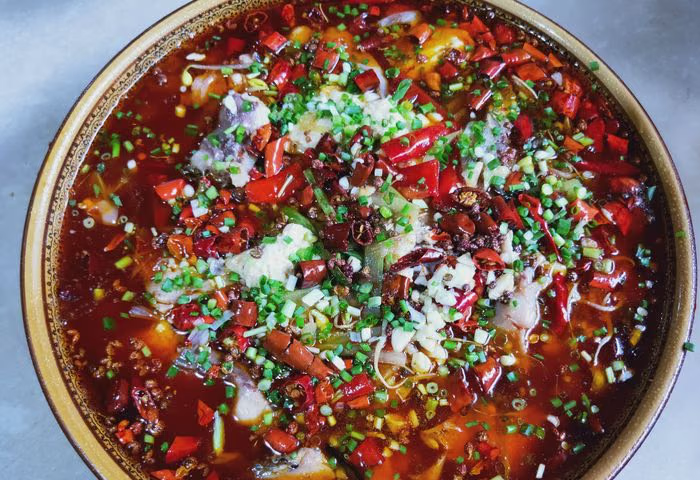
Youyuan Inn (有缘居客栈) at 川盐路52号 suits a meal centered on spicy fish with soft tofu (麻辣豆花鱼). Sour-pickled fish and bamboo shoots with smoked pork are other options. Expect to spend about CNY 62 (≈ USD 9.3 ≈ USD 9.3) per person.
Gongtan Beiheiguo Hotpot (龚滩杯黑锅火锅店)
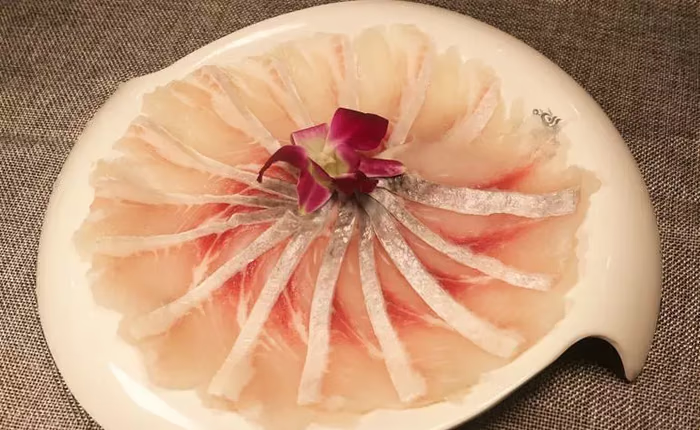
Gongtan Beiheiguo Hotpot (龚滩杯黑锅火锅店) at 西秦街36号 suits a shared fish hotpot. Try snakehead fish served three ways (乌鱼三吃), including fish-head soup with tofu, spicy fish bones and fish slices. Expect to spend about CNY 63 (≈ USD 9.4 ≈ USD 9.4) per person.
A two-day route with one night in town
Day 1: buildings, art and the evening riverfront
Travel from Chongqing East to Pengshui West in the morning, then take the road connection to Gongtan. Leave your bags at the inn and have lunch before walking the stone street.
Spend the afternoon on the stilt-house walk, Yongding Chenggui Stele and Xiqin Guildhall. Add Ran Family Courtyard or the Wu Guanzhong Memorial according to your interests. Keep these visits in one afternoon instead of making several trips down and up the same stairs.
Have a local dinner, then walk by the river to see the buildings lit after dark. Use this evening for a performance if one fits the day's programme.
Day 2: the river or a slower creative morning
Look at the river-facing houses before breakfast. Take the local cruise if the canyon is your main interest. For more time in town, choose a craft session, the art museum or a second street walk with your camera or sketchbook.
Finish with lunch or a small snack purchase, then take the return connection to Pengshui West for your train.
One day or three days
For a day trip, take an early outward train. Focus on the stone street, stilt houses, one courtyard and lunch. Choose either a local cruise or an art visit in the remaining time.
With three days, combine Gongtan with Youyang Taohuayuan (酉阳桃花源). Enter via Qianjiang, with about a 60-minute road connection to Taohuayuan. Stay in Youyang first, continue to Gongtan the next day and return through Pengshui West. This route gives each destination its own block of time.
Practical tips for the stone streets
- Entry: Walking the town's streets is free. Cruises, sightseeing vehicles and some individual sights have separate charges.
- Luggage and stairs: Ask your inn for its road arrival point before the transfer. Leave bags there before exploring the stepped lanes. Choose a nearby room if carrying bags down to the river would make arrival difficult.
- Food choices: Noodle and rice-jelly bases differ from their toppings. For meat-free food, use 不放肉,也不要肉汤 ("No meat and no meat broth"). For less heat, use 少辣 ("Less chili").
- Payments: Set up a payment method before leaving the city; our China payments guide explains the steps for Alipay and WeChat Pay.
Sources & updates
- Chongqing East–Qianjiang railway opening: National Railway AdministrationLast updated Oct 8, 2026
- Pengshui West connections to Gongtan: Youyang County GovernmentLast updated Oct 8, 2026
- Gongtan road access notices: scenic area operatorLast updated Oct 8, 2026
- Town admission and local river cruise: Gongtan scenic area operatorLast updated Oct 8, 2026
- Gongtan relocation and living heritage, July 2026: Guangming DailyLast updated Oct 8, 2026
- Salt trade and town background: Gongtan scenic area operatorLast updated Oct 8, 2026
- Town walking sights: Gongtan scenic area operatorLast updated Oct 8, 2026
- Xiqin Guildhall architecture: Chongqing Local Chronicles OfficeLast updated Oct 8, 2026
- Art spaces and Wu Guanzhong Memorial: Gongtan scenic area operatorLast updated Oct 8, 2026
- Local dishes: Gongtan scenic area operatorLast updated Oct 8, 2026
- Traditional Gongtan food preparation: Chongqing BendibaoLast updated Oct 8, 2026
- Gongtan Ranyu Fish Restaurant address and average spending: CtripLast updated Oct 8, 2026
- Stilt-house structure and street-facing buildings: Gongtan travel operatorLast updated Oct 8, 2026
- Youyang noodle and rice-jelly traditions: Youyang County GovernmentLast updated Oct 8, 2026
Did this guide help you?
Why? (optional)


