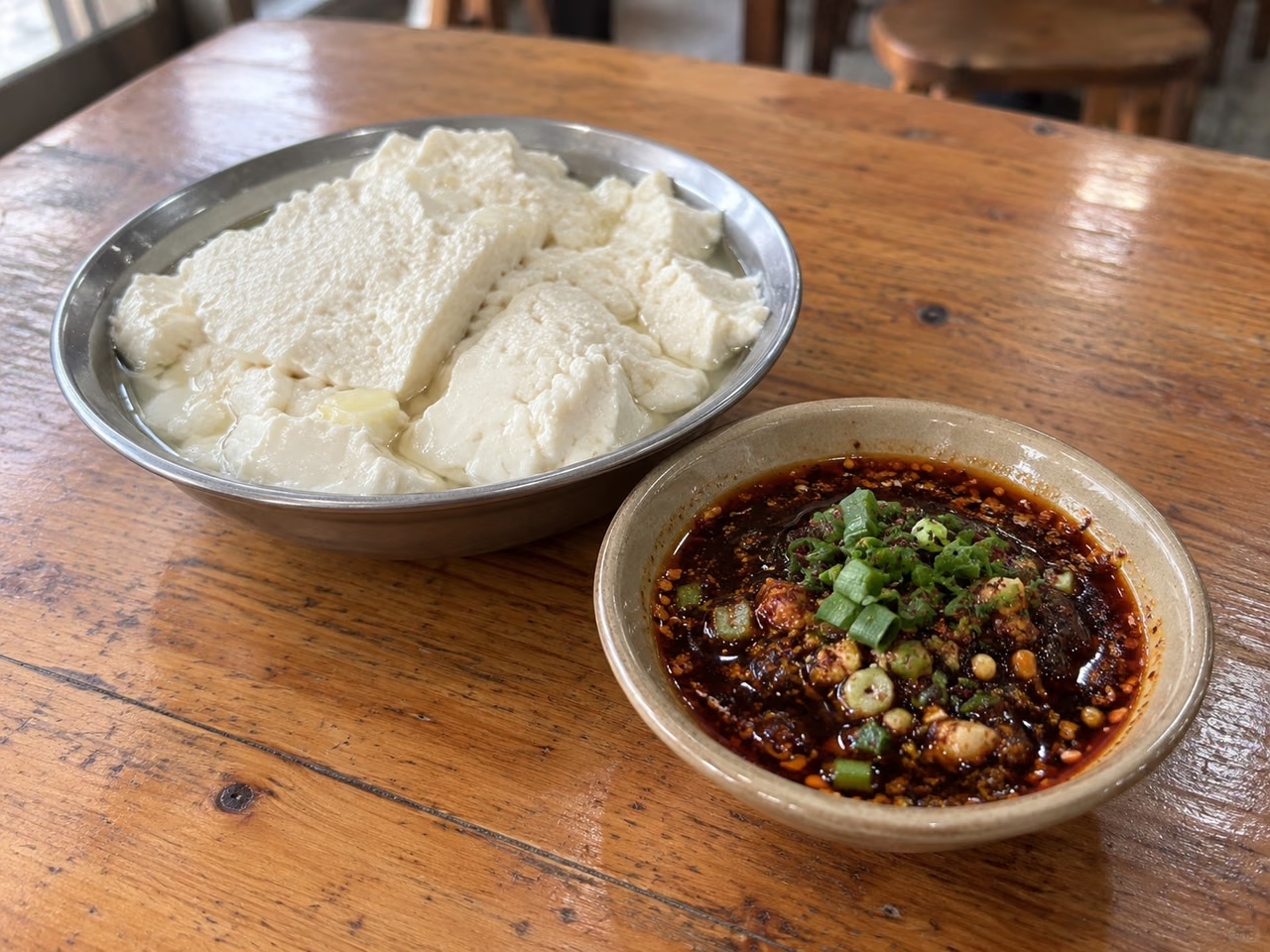
Luohan Temple (罗汉寺) sits directly between the modern high-rises near Jiefangbei. Its thousand-year-old rock carvings, 524 expressive Arhat statues and quiet rooftop corridors make it an easy stop right in the city centre. Set aside 60 to 90 minutes for the halls, or arrive by 10:00 to finish with lunch.
Map · SightsArrive before the last-entry cutoff
The main entrance is at 7 Luohan Temple Street (罗汉寺街7号). Take metro Line 1 or 6 to Xiaoshizi (小什字) and leave through Exit 6. From Jiefangbei, walk along Minzu Road (民族路) for about 15 minutes. Open the temple on the map.
Adult admission is CNY 20 (≈ USD 3.0 ≈ USD 3.0) per person at the ticket window by the gate. Your ticket includes three incense sticks and a small lotus candle to light at the outdoor burners.
| Dates | Opening hours | Ticket sales and last entry |
|---|---|---|
| 1 May to 7 October | 08:00 to 18:00 | 17:20 |
| 8 October to 30 April | 08:00 to 17:30 | 16:50 |
| Major Chinese public holidays | 08:00 to 18:00 | 17:20 |
The holiday schedule covers New Year, Spring Festival, Qingming, May Day, Dragon Boat Festival, Mid-Autumn Festival and National Day.
Slow down in the Gufoyan stone corridor

Just past the front gate, Gufoyan (古佛岩) is a covered stone corridor more than 20 metres long. Over 400 Song Dynasty carvings line the rock walls. Look for the reclining Buddha, Guanyin and smaller donor figures.
Take a moment to look at the carved robes and weathered faces standing out from the rock. These date back to the temple's founding in the Northern Song Dynasty between 1064 and 1067.
Meet the Arhats and try the counting custom
To the right of the rock corridor is the Arhat Hall (罗汉堂). An arhat is an enlightened follower of the Buddha. The hall holds 524 statues in total. The five hundred Arhats were remade in 2009 using layers of lacquer and fabric, then gilded.
Look closely at their faces and hands. Some grin, some look stern, and others lean forward in thought. Their lively poses make this one of the most interesting rooms to walk through slowly.
To try counting Arhats (数罗汉), pick any figure that catches your eye. Count along the rows until you reach your current age. The signs in the hall also explain other starting spots. Note the number on your final statue.
Daxiong Hall and photo spots

Continue into the courtyard of Daxiong Hall (大雄宝殿). The carved wooden doors, large incense burners and layered eaves make this a peaceful spot to rest.
The complex combines different eras. In 1885, the Arhat Hall was built based on Baoguang Temple near Chengdu. A major rebuild in 2009 updated the hall, main gate and layout. The temple was also a central filming spot for the popular 2006 Chinese comedy Crazy Stone (疯狂的石头).
Gold-carved side corridors

Walk along the side corridors of Daxiong Hall to see the gold-coloured carved woodwork. Looking down the corridor frames repeating pillars and soft daylight against the dark wood.
Roofs and skyscrapers from the upper gallery

Head up to the upper open gallery for a view across the curved tile roofs toward surrounding glass office towers. The contrast shows how the old temple sits right in modern Chongqing. The Scripture Building (藏经楼) stands just behind the main hall.
The round window near Weituo Hall

Near upstairs Weituo Hall (韦驮殿), a round window frames the sweeping eaves of Daxiong Hall. Downstairs, you will also find a crescent doorway and a carved Heart Sutra wall.
Vegetarian lunch at Wuguantang
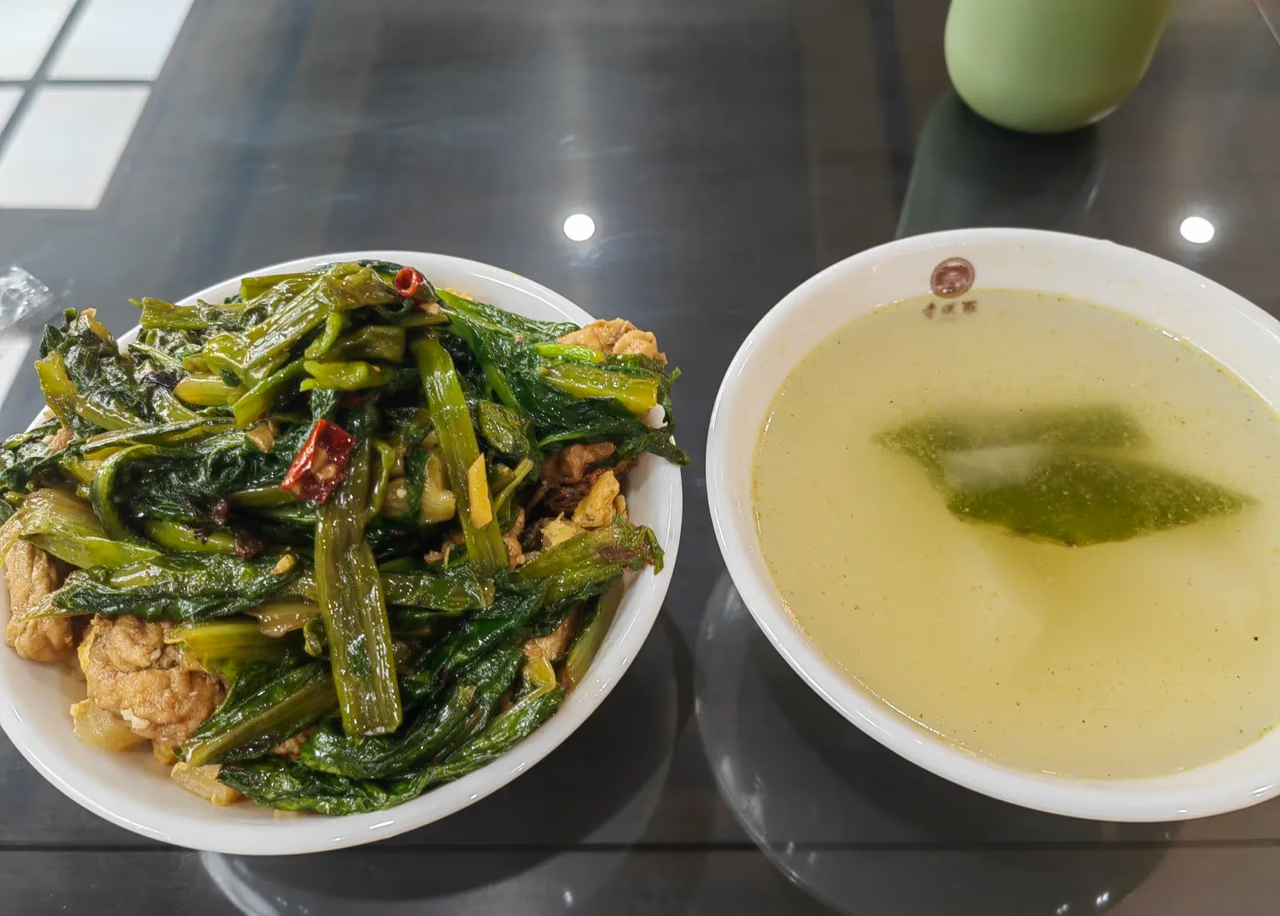
Wuguantang (五观堂), on the left side of the temple grounds, serves a simple communal vegetarian lunch. The meal is free; admission covers your entry. Join the queue outside the dining hall around 11:15 for the 11:30 opening.
Pick up your bowls and chopsticks in the side room before sitting down. Recent meals have included three vegetable dishes, soup, rice and congee. Some dishes contain chilli.
If you eat vegan, show the staff 我吃纯素,不吃鸡蛋、奶制品和蜂蜜 (I eat vegan food, without eggs, dairy or honey). Our vegetarian and vegan guide lists more dining spots across town.
Miaojie and the temple shops
Miaojie (妙街) is a small lane right beside the temple entrance. It is an easy place to grab a drink or a quick bite after your visit. Miaozai Coffee (妙哉咖啡) offers coffee, while Miankaka (面咔咔) serves spicy Chongqing noodles.
Inside the temple, the gift counter (流通处) sells prayer beads, wooden bracelets and small souvenirs.
A morning walk from Jiefangbei

Start at the Liberation Monument in Jiefangbei around 09:45 and walk down Minzu Road.
- 10:00 to 11:15: Enter Luohan Temple. Walk through the stone corridor, explore the Arhat Hall, and head up to the roof photo spots.
- 11:15: Join the queue outside Wuguantang and pick up your dining bowls.
- 11:30: Enjoy the vegetarian lunch.
- After lunch: Step into Miaojie for coffee, then head back to Jiefangbei. For more snack options, check our street food guide, or walk downhill toward Hongya Cave.
Choose an independent visit or a guide
The temple, Miaojie and Jiefangbei are simple to explore on your own on foot. If you prefer someone to explain the temple history and old riverside neighbourhoods, consider a guided visit to Luohan Temple and Huguang Guild Hall.
Practical tips for a working temple
Photos are not allowed inside the Arhat Hall. Feel free to take pictures in the courtyards, side corridors and upper galleries. Do not touch the ancient stone carvings in the Gufoyan corridor.
The temple has raised door thresholds and several outdoor staircases to reach the upper galleries. Check our accessible travel guide for city routes with fewer stairs.
Sources & updates
- Lonely Planet: Luohan Temple, full attraction descriptionLast updated Oct 6, 2026
- Ctrip: current seasonal opening hours and attraction informationLast updated Oct 10, 2026
- iChongqing: temple history and the Arhat HallLast updated Oct 6, 2026
- Yuzhong Commerce Commission: Miaojie shops, 15 June 2026Last updated Oct 6, 2026
- Xiaohongshu: 罗汉寺,不止是出片, visitor note displayed 08-27Last updated Oct 6, 2026
- 重庆晚报:十八位高僧为罗汉寺新五百罗汉开光(2009年9月12日)Last updated Oct 6, 2026
- 重庆晨报:罗汉寺,相传明建文帝曾在此小住过(2023年8月19日,第6版)Last updated Oct 6, 2026
- 小紅書:ZZzz,重慶解放碑羅漢寺免費齋飯(2026年5月16日)Last updated Oct 10, 2026
- 小紅書:貢丸先生,羅漢寺門票與免費齋飯(2026年7月4日)Last updated Oct 10, 2026
- 小紅書:macross,五觀堂齋飯時間與取碗方式(2026年1月25日)Last updated Oct 10, 2026
- 新華每日電訊:重慶羅漢寺,城市中的古剎(2026年4月17日)Last updated Oct 10, 2026
Did this guide help you?
Why? (optional)